
SEO page stays indexable
Your page can include headings, copy, links, FAQs, and schema around the game frame.
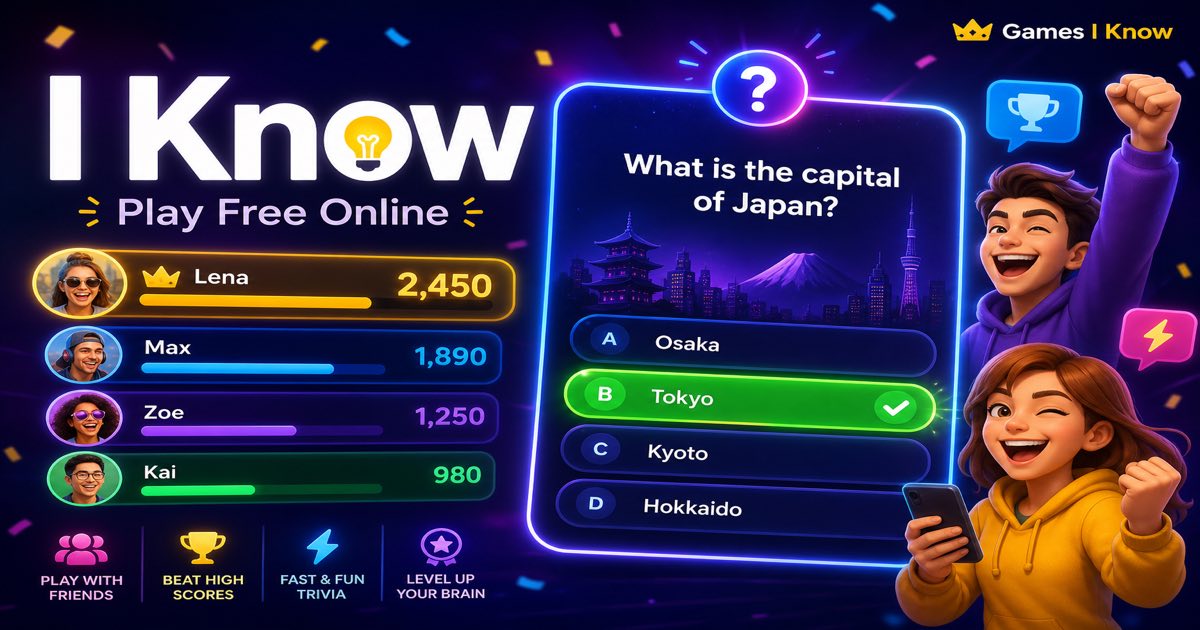
Next.js game widget
Next.js sites can add a playable game without shipping a game engine in the app bundle. Use an indexable page for the content, render the Games I Know frame for play, and handle events in a client component when needed.
App Router friendly
Indexable page copy
Client event handling
Framework-safe iframe
Short answer
For Next.js, keep SEO metadata and page copy in the route, then render the Games I Know iframe in a client-safe component with /embed/{gameSlug}/frame/ as the src.
The live demo shows the frame route and the event log a Next.js client component can consume.
Next.js teams adding an iframe game
Next.js is strongest when the page content and metadata are server-rendered while browser-only behavior stays in focused client components.
Your page can include headings, copy, links, FAQs, and schema around the game frame.
The game lives inside the iframe, so your Next.js route stays simpler and faster to maintain.
Only the event listener and iframe controls need client-side behavior.
Setup flow
Create an indexable route, place the iframe in the content, and use a client component only for event handling.
Step 1
Add metadata, canonical URL, page copy, and links for the intent you want the page to serve.
Step 2
Use the Games I Know frame URL with your tenantId inside the page body or a small component.
Step 3
In a client component, listen for message events and filter on data.source === "gamesiknow".
Step 4
Use an API route or backend service to verify signed results before granting rewards.
Implementation
Separate crawler-friendly content from browser-only message handling so the page is useful to both humans and AI search systems.
Set title, description, canonical, Open Graph tags, and FAQ schema on the public page that hosts the widget.
The public /embed/{gameSlug}/ page is indexable content. The iframe should use /embed/{gameSlug}/frame/.
Reserve a fixed game height so the iframe does not push content around after load.
Drop-in tsx for next.js game widget — swap in your tenant ID.
"use client";

export default function GameWidget({ tenantId }: { tenantId: string }) {
  return (
    <iframe
      src={`https://gamesiknow.com/embed/tic-tac-toe/frame/?tenantId=${tenantId}`}
      title="Tic Tac Toe by Games I Know"
      width="100%"
      height={640}
      loading="lazy"
      allow="fullscreen"
      allowFullScreen
      style={{ border: 0, borderRadius: 12 }}
    />
  );
}
Available games
Tic Tac Toe
Embed for same-screen play on your site, or send players to Games I Know to challenge a friend remotely with a room link.
Embed setup
Four in a Row
Embed for local two-player drops on one screen, or link friends to play Four in a Row online from anywhere.
Embed setup
Bingo
Same-screen Bingo in your embed, or host a remote room so players can join from their own devices.
Embed setup
I Know
Quick trivia in your embed on one screen, or run a live room so friends can answer from anywhere.
Embed setup
Sudoku
Embed a solo Sudoku puzzle for calm brain breaks on blogs, school pages, and waiting-room screens.
Embed setup
Word Search
Embed a solo Word Search puzzle for quick brain breaks on blogs, school pages, and waiting-room screens.
Embed setup
FAQ
Use /embed/{gameSlug}/frame/ as the iframe src. That route is the lightweight game frame built for website embeds and postMessage events. The /embed/{gameSlug}/ route is the public preview and SEO page for people, not the route to place inside an iframe.
No. Visitors can play inside the browser iframe on phone, tablet, laptop, or desktop. A partner account is only needed by the website owner who installs the embed.
Yes. Games I Know embeds are designed around registered websites and domain-restricted tenant settings, so copied iframe code cannot be freely reused on unauthorized sites.
Tic Tac Toe, Four in a Row, Bingo, and I Know are available as embeddable browser games. The embed documentation uses the same event model across supported games.
The iframe markup can be rendered from a server component, but any postMessage listener or fullscreen state should live in a client component.
Create a partner account, register your domain, and generate a domain-restricted iframe for your website.